At a glance
- Documents: valid Belgian identity card; passport not required for a tourist stay in Norway
- Best time to visit: summer (June–August) for road trips and the fjords, winter (December–February) for Northern Lights enthusiasts
- Budget: €700 to €3,500 per week per person, depending on travel style, excluding flights
- Travel insurance: Norway is covered under Redion’s European cover; worldwide cover is not required
Travelling to Norway requires slightly different preparation than a typical holiday in Europe. Not because of the formalities (an identity card is sufficient), but rather because of the budget. Norway is one of the most expensive countries in Europe. The climate and the distances involved also deserve the traveller’s attention before booking a ticket.
With its breathtaking fjords, the Northern Lights and charming harbour towns, Norway remains a special destination, provided you know when to go, how to get around and what budget to set aside.
This guide contains everything you need to know to organise your trip with peace of mind, from travel formalities to choosing your travel insurance.
The best destinations when visiting Norway
Get ready for what lies ahead if you’re visiting Norway for the first time. The country comprises a number of key regions, each with its own distinct character, which helps when putting together a coherent itinerary.
The fjords: Norway’s postcard-perfect scenery
The Geirangerfjord and the Nærøyfjord, both listed as UNESCO World Heritage Sites, are among the country’s most iconic spots, with their waterfalls plunging straight into the water and their dizzying rock faces.
The Sognefjord, Norway’s longest and deepest fjord, is particularly well suited to a peaceful boat trip. These three fjords can best be visited by boat or on walking tours organised from the surrounding villages.
Oslo and Bergen: two faces of urban Norway
Oslo, the capital, boasts contemporary architecture, museums and extensive green spaces close to the city centre.
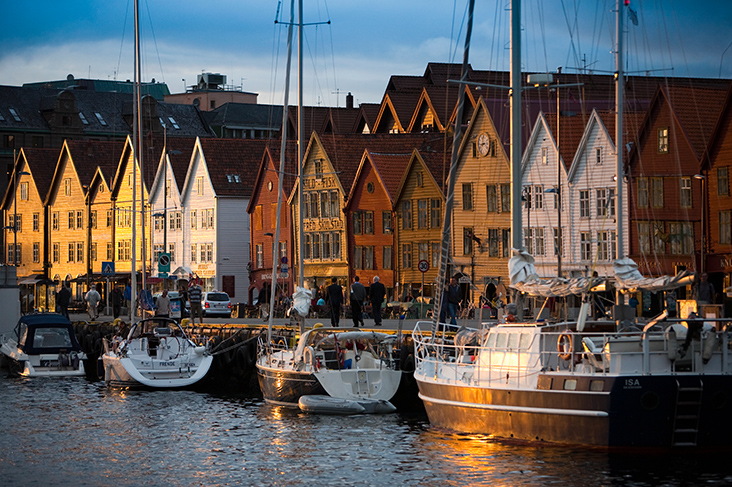
Bergen, the country’s second-largest city, is an unmissable stop-off on the way to the fjord region. The historic Bryggen district, with its colourful Hanseatic warehouses, is also a UNESCO World Heritage Site.
The two cities complement each other well in a single itinerary and are linked by one of the most beautiful railway lines in Europe. Do allow for a journey time of seven hours!
The Lofoten Islands and the far north
The Lofoten Islands are characterised by their mountain peaks that plunge straight into the sea and their fishing villages with their typical red cottages, the rorbu.
Like the whole of the country’s north, this region is ideal for both hiking in summer and observing the Northern Lights in winter, a topic covered in detail later in this guide.
Do you need a passport or identity card to travel to Norway?
To travel to Norway, Belgian nationals do not need a passport or visa: a valid identity card is sufficient for the entire stay. This is confirmed by FPS Foreign Affairs in its practical information on Norway.
The country is, in fact, one of the few in Europe, outside the European Union, where the Belgian identity card is recognised as a fully valid travel document.
- The identity card. This must remain valid for the entire duration of the stay; it is the simplest document for a tourist trip or a short city break
- The passport. A passport is not compulsory, but is useful for longer stays or certain administrative formalities whilst there, as various Norwegian banks and government agencies do not always recognise the identity card
- The visa. No visa is required for a tourist stay of less than 90 days, as Norway applies the rules of the Schengen Area, despite not being a member of the European Union
For children travelling with only one parent, it is also advisable to check the parental consent documents that are generally recommended for any stay abroad.
What is the best time of year to visit Norway?
The choice of the best season to visit Norway depends on the type of trip you are planning. A road trip along the fjords, a city break to Oslo and a hunt for the Northern Lights do not, in fact, require the same preparation at the same time of year.
| Season | Period | What makes it interesting? |
|---|---|---|
| Summer | June to August | Very long days, accessible fjords, ideal for a road trip |
| Autumn | September to October | Autumn colours, fewer crowds, the start of the Northern Lights |
| Winter | December to February | Northern Lights, Arctic activities, often lower prices in town |
| Spring | April to May | Pleasant city breaks, nature comes to life, good value for money |
Summer, the season for road trips and fjords
From June to August, the “endless days”, right up to the midnight sun in the far north, mean you can make the most of tourist routes, hiking trails and cruises through the fjords.
This is also the busiest and most expensive time of year, particularly when it comes to accommodation.
Spring and autumn: ideal for city breaks
April, May and September are good months to travel to Norway: the temperatures are still pleasant, it’s less crowded than in the height of summer and prices are generally more affordable.
These seasons are particularly well suited to a city break to Oslo or Bergen, for example.
Winter, the season of the Northern Lights
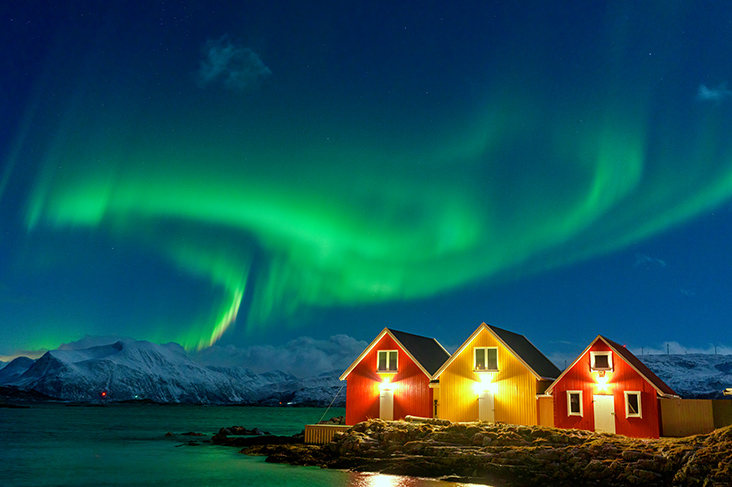
Travelling to Norway in winter mainly attracts enthusiasts of the Northern Lights, which can be seen from September to March, peaking between December and February, particularly in Tromsø and the Lofoten Islands.
A clear sky is never guaranteed. It’s best to stay in the area for several nights and keep an eye on the weather forecasts via Norway Lights.
The season is also ideal for Arctic activities, such as dog sledging and snowmobiling, provided you have the right equipment and drive carefully.
Read our article on Tromsø too.
How much does a trip to Norway cost?
The cost of a trip to Norway varies greatly depending on the type of holiday you choose. Generally speaking, expect to pay between €700 and €3,500 per week per person, excluding flights.
The country remains one of the most expensive in Europe. It’s better to factor this into your travel budget than to be caught out by the high prices once you’re there.
The most expensive items
- Food and drink. Eating out in Norway is considerably more expensive than in Belgium, even for a simple meal. Labour costs are particularly high there, so cooking for yourself remains the best way to keep expenses under control
- Accommodation. Prices vary greatly depending on the region and the season, with rates skyrocketing during the summer high season
- Transport within the country. Car hire, tolls, ferries and fuel often make up a significant part of the budget, especially on a road trip through the fjords
- Activities. Some organised excursions, such as whale watching, fjord cruises and hunting for the Northern Lights, come with a hefty price tag. Fortunately for those who don’t want to break the bank, many outdoor activities, such as hiking, are still free
What budget should you set aside for a week-long trip to Norway?
Allow for around €700 to €1,300 per person for a week travelling on a budget, with camping, self-catering and public transport.
Allow €1,300 to €2,000 for a standard stay in basic hotels with the occasional restaurant, and €2,000 to €3,500 for a comfortable stay in four-star hotels with restaurants and a hire car, excluding flight tickets.
Of course, it all depends on the deals you find and the time of year.
Before you set a specific amount for your travel budget for a week in Norway, it’s best to compare the prices of flights and accommodation for your exact travel dates, as these vary considerably depending on the season and the region you wish to visit.
| Traveller profile | Accommodation | Meals | Transport | Estimated budget per week, per person |
|---|---|---|---|---|
| Budget | Youth hostels, camping | Cooking for yourself with groceries from the supermarket | Train, bus, carpooling | €700 to €1,300 |
| Standard | Two- to three-star hotels, cabins (hytter) | A combination of cooking for yourself and eating out occasionally | Shared hire car | €1,300 to €2,000 |
| Comfort | Four-star hotels, charming accommodation | Restaurants for most meals | Own car, organised excursions | €2,000 to €3,500 |
A few tips to help you stick to your budget
- Cook for yourself. In Norwegian supermarkets, such as Rema 1000 or Kiwi, you can put together meals at a reasonable price that are much cheaper than eating out
- Make the most of the right of public access. “Allemannsretten”, the right of access to nature unique to the Scandinavian countries, allows walking and light camping in numerous nature reserves, significantly reducing accommodation costs
- Book early and travel outside the peak season. Flight tickets and accommodation are considerably cheaper outside the months of June to August and if you avoid last-minute bookings
- Opt for the train and public transport. Much of the country is accessible without a car, allowing you to avoid the costs of car hire, fuel and tolls
- Consume less fuel. On a road trip of several hundred kilometers between the fjords, you can significantly reduce fuel costs with a few simple adjustments to your driving style, an expense that carries significant weight over long distances
Travelling in Norway by car, train or boat?
The train is a comfortable way to discover the country, but the car remains an attractive option for exploring the most remote areas and maintaining as much independence as possible.
The ferry, in turn, is a useful complement to the train and the car for exploring the coastlines.
Visiting Norway by train: an extraordinary railway experience
The Bergen Line, which connects Oslo with Bergen in around six and a half to seven hours, traverses plateaus and snow-capped mountains and is regularly cited as one of the most beautiful train routes in the world.
At Myrdal, this line connects with the Flåmsbana, a line with a very steep gradient that descends to the village of Flåm, on the shores of the Sognefjord.
These two lines form the core of the tourist route known as “Norway in a Nutshell”, which combines train, boat and bus to link Oslo, Bergen and the fjords without the need for a car.
To organise these trips, Entur, the official Norwegian travel planner, brings together trains, buses and ferries in a single app, and you can buy most tickets online.
Visiting Norway by car
Driving in Norway generally follows the same rules as in Belgium, with a few specific points you should be aware of before setting off.
The legal blood alcohol limit is just 0.2 grams per liter of blood, one of the strictest limits in Europe. Vehicles must be fitted with snow chains or suitable tyres as soon as snow or black ice is forecast, regardless of the time of year.
- Dipped headlights. Dipped headlights must be switched on all year round, both during the day and at night
- Speed limits. These are generally lower than in Belgium: 50 km/h in built-up areas, 80 km/h outside built-up areas and 100 km/h on the motorway, unless otherwise indicated
- Speed cameras. They are numerous and clearly signposted, but the fines for speeding remain very high
- Toll roads. Many road sections and ferries are subject to tolls, which can significantly increase the travel budget mentioned above. They operate via the automatic AutoPASS system, without barriers or stops. Your number plate is read as you pass, and if you are driving a hire car, the hire company is already registered and will charge you the tolls afterwards
- In remote areas. Watch out for wildlife crossing the road, which can often cause road accidents
Don’t forget to check the condition of your tyres before setting off. This is very important on Norwegian mountain roads.
You should also adapt your driving style in wet conditions to minimise the risk of aquaplaning.
Ferries and coastal connections
Along the coast, shipping companies such as Hurtigruten connect numerous ports in the south with the north of the country, stopping off at villages that would otherwise be difficult to reach.
This option is particularly appealing to travellers who want to explore Norway in a different way than by car or plane.
What you need to arrange before you set off
As well as your identity documents, there are a few other essential items that deserve a place in your suitcase or on your checklist before you set off for Norway.
Money and payment methods
The local currency is the Norwegian krone (NOK). It has a floating exchange rate. On 30 July 2026, €1 was roughly equal to NOK 10.98.
To ensure you’re well prepared, it’s best to check the current exchange rate before you set off.
In practice, paying by card or contactless has become the norm almost everywhere, even for very small amounts, meaning you’ll need far less cash whilst you’re there.
Check in advance what fees your bank charges so that you can estimate the exact cost of your expenses.
Electricity and internet connection
In Norway, the standard European plug types C and F are used, which are compatible with most Belgian appliances using types E and F.
As for internet connectivity, coverage varies greatly depending on the regions of Norway you are travelling through. It is therefore advisable to download your train tickets or travel itineraries in advance.
Clothing for the Norwegian climate
The layering principle remains the most effective, whatever the season: a breathable layer close to the body, an insulating layer and a waterproof layer on top.
Even in summer, evenings can be chilly, especially in the fjords and at higher altitudes.
Read our article on cold countries.
Also bear in mind the mosquitoes, which can be numerous in some areas during the warmer months.
Health and safety in Norway
The healthcare system and the cost of healthcare in Norway
The healthcare system in Norway is renowned for its quality, but fees remain very high for visitors, particularly for a consultation or hospital admission that must be paid for without appropriate cover.
As regards medicines, Norway applies the same rules as the European Union regarding cross-border prescriptions. Bring your original prescription with you, preferably stating the generic name of the active ingredient, to facilitate communication with a Norwegian pharmacist.
Is the European Health Insurance Card valid in Norway?
Yes. Norway is not part of the European Union, but it is a member of the European Economic Area, which means the European Health Insurance Card is valid within its territory.
However, the card does not cover private healthcare or repatriation in the event of serious problems. It is therefore advisable to supplement it with travel insurance.
Which travel insurance should you choose for Norway?
Norway falls within the European coverage area of the Redion packages: Light, Smart, Sport and VIP.
This cover includes reimbursement of medical expenses, the organisation of repatriation if your state of health requires it, and assistance available 24 hours a day, seven days a week.
For road trip enthusiasts, the breakdown assistance option is recommended in Norway. This cover is essential if you’re travelling in your own car and sometimes take remote roads where a breakdown can cause a great deal of lost time and stress.
If you travel several times a year, an annual package is generally better value than a series of short-term policies.
On our page about travel insurance for Norway, you’ll find full details of our specific offers for this destination.
FAQ: Frequently Asked Questions about travelling to Norway
A valid Belgian identity card is sufficient for a tourist visit to Norway; a passport is not required.
However, a passport remains useful for longer stays or certain local administrative formalities. If you are staying for more than 3 months, you will need a visa.